How Does the EZGO Kawasaki Carburetor Work?
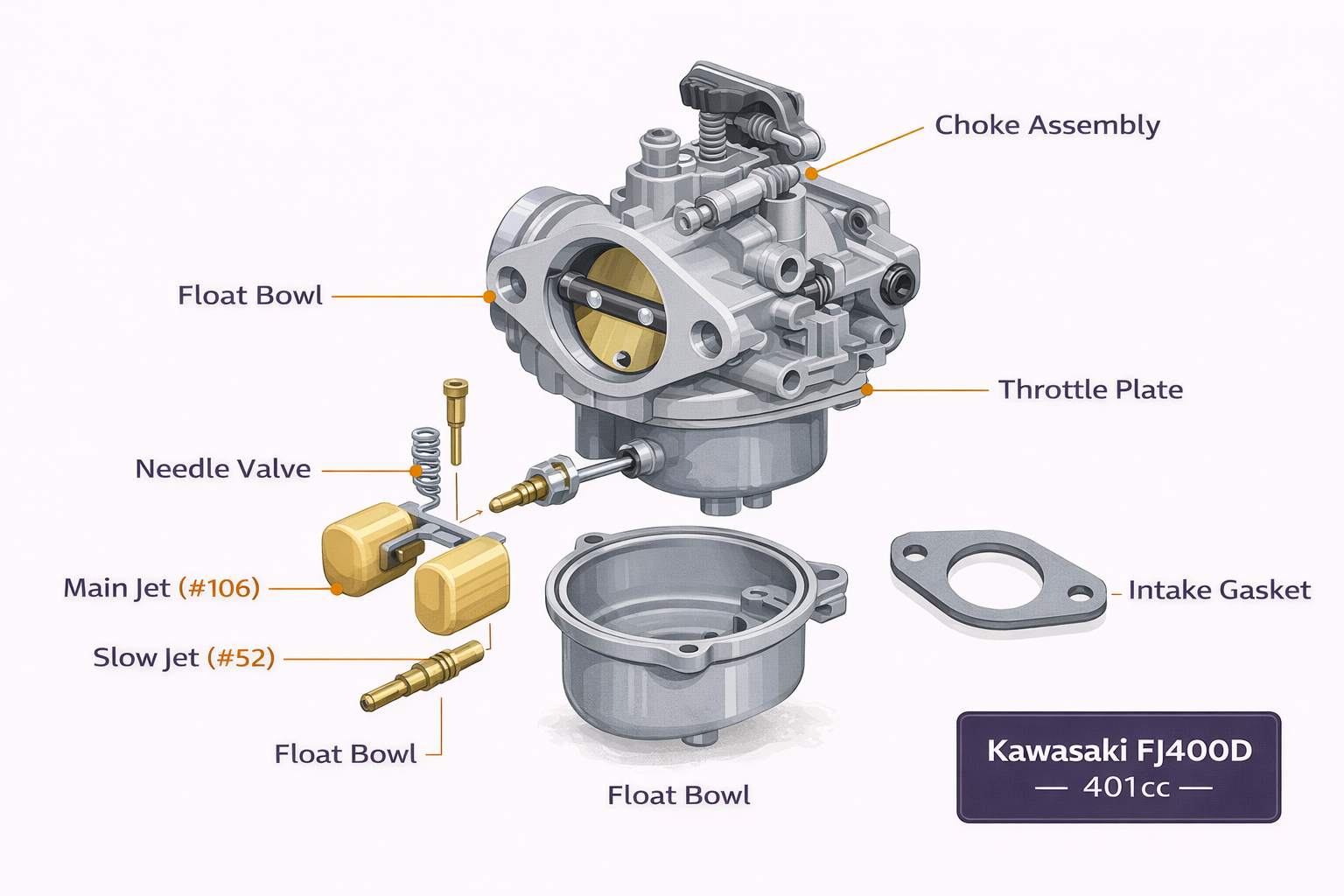
The Kawasaki FJ400D is a 401cc, single-cylinder OHV (overhead valve) air-cooled 4-stroke gasoline engine that powered EZGO RXV, TXT, and Valor carts from 2008 through mid-2019.
The carburetor sits between the air filter and the intake manifold, controlling every drop of fuel that enters the engine.
Fuel flows from the tank through the OEM EZGO Fuel Pump (PN #602061) into the carburetor’s float bowl. The float needle valve maintains a consistent fuel level in the bowl.
When the throttle opens, engine vacuum pulls fuel through calibrated jets, specifically the #106 main jet for primary fuel delivery and the #52 slow jet for low-speed circuits, mixing it with filtered air before delivery to the combustion chamber.
The outcome of that process is clean ignition, consistent power delivery, and reliable starting.
When any component inside the carburetor fails, whether a clogged jet, a stuck float, or a degraded needle valve seat, the entire fuel delivery system is compromised.
For a complete overview of all EZGO gas engine components and how they work together, visit the EZGO Golf Cart Parts Guide.
What Is the Difference Between a Carburetor and EFI on an EZGO?
Carbureted EZGO engines use atmospheric pressure and engine vacuum to passively draw fuel into the intake.
EFI (Electronic Fuel Injection) engines, introduced on the 2019.5 EZGO models with the Kawasaki EFI upgrade, use electronic injectors controlled by an engine management computer to deliver precise fuel quantities.
The EFI system eliminated several common carburetor failure points: varnish buildup in jets, float valve wear, and altitude-related fuel mixture issues.
Owners of EFI-equipped carts should not use carburetor parts from the 2008-2019 carbureted engine line.
The two fuel systems are completely different and share no serviceable components.
According to the EPA’s regulations for small spark-ignition engines, Phase 3 exhaust emission standards for engines under 19kW have been in effect since 2011-2012, which influenced EZGO’s eventual move toward fuel injection to meet tighter emissions compliance.
For a deeper look at every gas engine part category, including drive belts, fuel pumps, and complete engine assemblies, visit the EZGO Golf Cart Gas Motor Guide & AC vs DC Golf Cart Motors.
How Do You Know When Your EZGO Kawasaki Carburetor Needs Replacing?
EZGO RXV, TXT, and Valor owners who run the Kawasaki FJ400D engine will typically notice carburetor problems developing gradually before a complete failure occurs.
Catching the symptoms early saves time and prevents additional engine damage from running lean or flooding.
The most reliable warning signs of carburetor failure include:
- Hard starting that requires choke engagement to fire. When the engine starts only with the choke engaged, the carburetor’s internal jets restrict fuel flow below the threshold required for normal combustion. The choke compensates by enriching the mixture artificially.
- Engine surging or hunting at steady throttle. The engine speeds up and slows down rhythmically without pedal input, signaling inconsistent fuel delivery through the main circuit.
- Black exhaust smoke or fouled spark plugs. Excess fuel in the mixture produces black smoke and rapid plug fouling, typically caused by a float that is no longer shutting off fuel flow properly.
- Fuel is leaking from the float bowl or overflow tube. A stuck float needle valve allows the bowl to overfill, pushing raw fuel into the intake or out the breather tube.
Mike Taylor, a Carts & Parts customer, experienced exactly this kind of carburetor problem:
“Very good service helpful in finding correct carburetor. Called me back and followed up. Delivery time fast. Will use them again.”
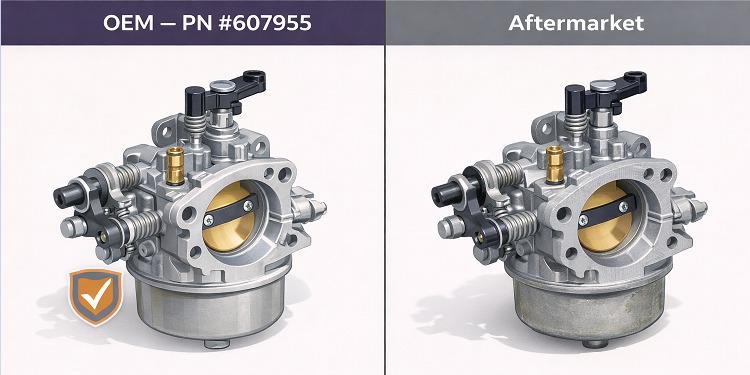
Replacing the carburetor with the correct OEM part — OEM EZGO Golf Cart Carburetor, PN #607955 (SKU 607955) — ensures factory calibration is restored, not approximated.
What Are the Steps to Replace an EZGO Kawasaki Carburetor?
Replacing the carburetor on a Kawasaki FJ400D is a manageable task when approached systematically. Rushing the job or skipping documentation steps leads to incorrect reassembly and continued problems.
- Photograph all linkages and spring connections before removal. The throttle linkage, choke cable bracket, and fuel line connections must all return to their exact original positions. A clear photo taken before removal is far more reliable than memory during reassembly.
- Shut off the fuel valve and drain the float bowl. Remove the bowl drain screw and allow the fuel to drain completely before disconnecting the fuel line. Skipping this step risks spilling fuel near hot engine components.
- Remove the intake manifold bolts and the carburetor as a unit. The OEM EZGO carburetor assembly includes intake gaskets and a base gasket. Install fresh gaskets from the replacement assembly rather than reusing the old ones.
- Install the new OEM carburetor and reconnect all linkages per your photographs. Start the engine immediately after installation and allow it to reach operating temperature before making any idle adjustments.

Which OEM EZGO Carburetor Parts Are Right for Your Engine?
EZGO gas carts span multiple engine generations, and choosing the wrong carburetor will result in a part that physically fits the mounting points but is calibrated incorrectly for your engine.
The OEM EZGO Golf Cart Carburetor, PN #607955 (SKU 607955), the OEM EZGO Carburetor, Robins Engine (SKU 72840G01), and the OEM EZGO 13.5-HP Kawasaki Engine, PN #689380 (SKU 689380), are each designed for a different engine platform and are not interchangeable.
When carburetor damage is severe or the engine has high accumulated hours with multiple fuel system failures, a complete engine replacement using the OEM EZGO 13.5-HP Kawasaki Engine, PN #689380, may be the more cost-effective path.
A complete engine assembly resets all tolerances simultaneously.
What Other Fuel System Parts Should You Inspect During Carburetor Replacement?
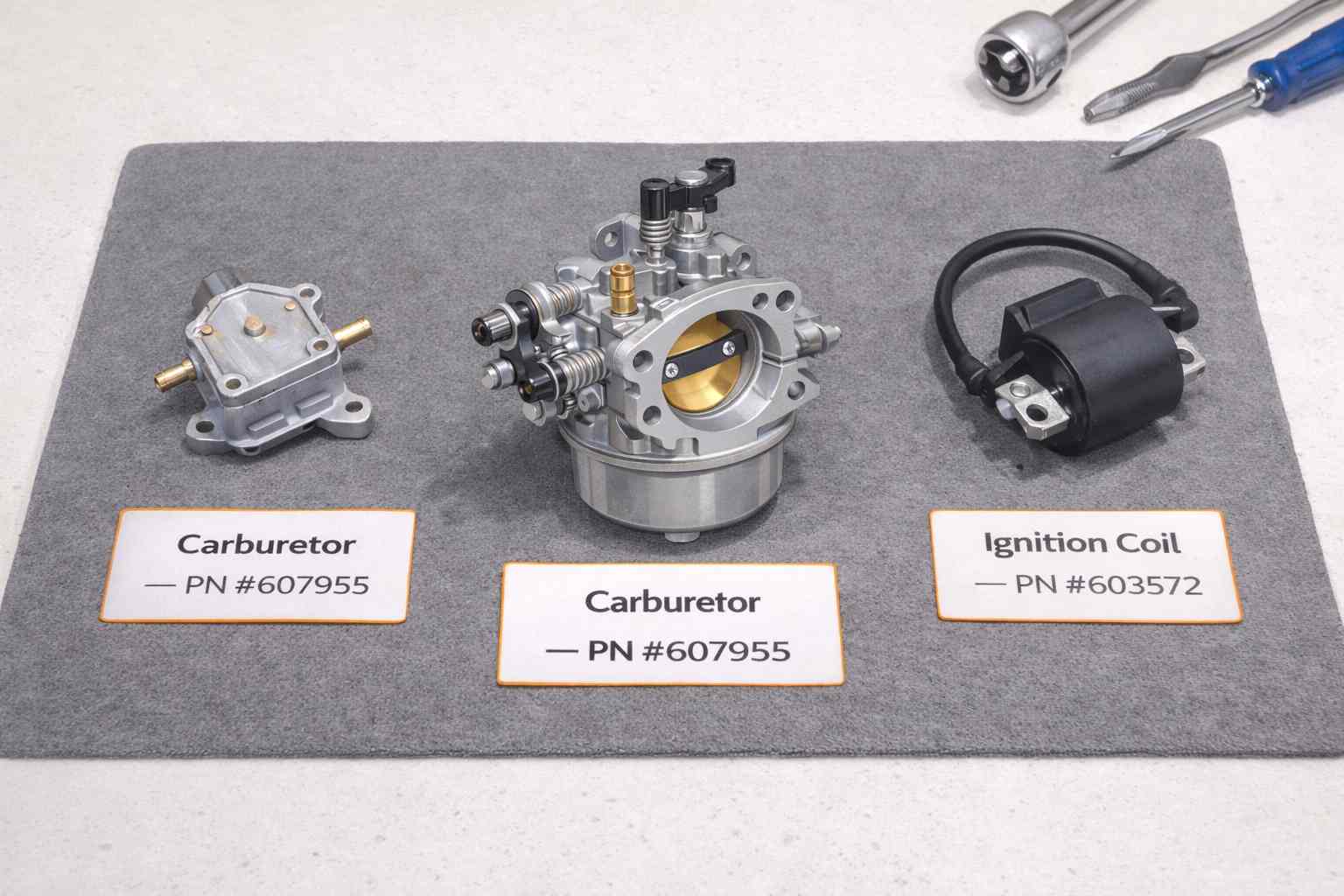
The OEM EZGO Fuel Pump PN #602061 (SKU 602061), OEM EZGO Ignition Coil PN #603572 (SKU 603572) for 2008-2018 carbureted engines, and OEM EZGO Ignition Coil Kawasaki EFI PN #670119 (SKU 670119) for 2019-2025 EFI models are the three most commonly overlooked components during a carburetor service.
Removing the carburetor provides direct access to the fuel pump and intake area with minimal additional labor. Inspecting and replacing if needed these components at the same time prevents a return repair visit in the near future.
Fuel pump (SKU 602061): The OEM EZGO Fuel Pump PN #602061 delivers fuel from the tank to the carburetor float bowl on pulse pressure from the engine crankcase.
A weakening pump produces identical symptoms to a clogged carburetor: hard starting and fuel starvation under load. Replacing it alongside the carburetor eliminates a common misdiagnosis.
Ignition coil: A weak spark is a secondary cause of hard starting and misfires, often blamed on the carburetor.
The OEM EZGO Ignition Coil PN #603572 (SKU 603572) covers 2008-2018 Kawasaki carbureted engines. The OEM EZGO Ignition Coil Kawasaki EFI PN #670119 (SKU 670119) covers 2019-2025, EFI-equipped models. Installing an ignition coil intended for the wrong engine type will result in no-spark or misfiring conditions.
Kevin Heaney, a long-time Carts & Parts customer who drove 90 minutes for a same-day gas cart repair, described the experience:
“Outstanding Service today. I had an electrical issue with my three year old EZGO Gas Cart. Starting with my purchase from Jeff three years ago to both Cole and Cade taking care of my problem today… Problem taken care of along with a tuneup and service. Fantastic customer service from a Family that cares.”
According to the EPA’s nonroad engine certification standards, OEM-certified replacement components must conform to the same emissions performance as the original certified engine assembly.
Using non-certified components on an emissions-compliant engine may void the certification and affect legal operation in regulated environments.
How Do You Clean a Golf Cart Carburetor?
Golf cart carburetor cleaning is a legitimate repair option when the carburetor shows early-stage varnish buildup with no physical damage to the float, needle valve seat, or throttle plate.
The process requires complete disassembly, not a spray-and-wipe approach.
Proper cleaning involves removing the carburetor from the engine, disassembling every component, including the float and needle valve, and soaking all metal parts in a commercial carburetor solvent for several hours.
After soaking, use low-pressure compressed air to clear all jet passages and ports. Pay specific attention to the main jet (#106) and slow jet (#52) passages, as these are the first areas to restrict from varnish accumulation.
A critical caution: removing the bowl and spraying cleaner inside without full disassembly is not a complete cleaning. Varnish deposits in the jet passages require complete solvent immersion and air-pressure clearing to be removed reliably.
Even thorough cleaning has a practical ceiling.
When the float needle valve seat is worn, the throttle plate is scored, or varnish has permanently bonded to internal passages, cleaning will not restore factory performance. In those cases, replacing the carburetor with OEM PN #607955 is the correct path.
How Do I Know If My Golf Cart Carburetor Is Bad?
A bad golf cart carburetor produces symptoms that follow a recognizable pattern, starting with minor performance issues and progressing to complete inability to run without choke assistance.
The progression typically moves through these stages:
Stage 1 — Early failure: The engine takes extra cranking to start on cold mornings. Performance feels slightly flat at mid-throttle. No visible fuel leaks.
Stage 2 — Moderate failure: Starting requires partial choke engagement even after the engine is warm. The engine surges at a steady speed. Fuel smell near the engine when stopped.
Stage 3 — Advanced failure: The engine will not run without full choke. Raw fuel overflows through the breather tube. Spark plug inspection reveals heavy black carbon fouling.
Fuel overflowing from the breather tube is a specific indicator of float needle valve failure, where the carburetor can no longer shut off fuel flow to the bowl.
Left unaddressed, this condition forces raw gasoline into the crankcase, contaminating the engine oil and causing accelerated internal wear. Immediate carburetor replacement is necessary at this stage.
What Happens If You Don’t Address a Failing EZGO Carburetor?
Ignoring a failing golf cart carburetor does not stabilize the problem it compounds it. Each operating hour with a degraded carburetor adds wear to components that were not the original failure point.
- Varnish spreads through the fuel system. Deposits that form in the carburetor migrate upstream into the fuel pump and downstream into the intake valves, increasing the scope of the repair needed.
- Fuel contamination enters the crankcase. A stuck float needle valve allows fuel to drain continuously into the float bowl and eventually into the intake, mixing raw gasoline with engine oil. Oil contaminated by gasoline loses viscosity and lubricating ability, accelerating wear on piston rings and cylinder walls.
- The engine begins misfiring regularly. Running lean from restricted fuel delivery causes combustion temperatures to spike, stressing the ignition coil, spark plug, and exhaust system simultaneously.
- Complete engine replacement becomes the only option. Extended operation with a flooded carburetor or severely lean condition can result in engine damage that makes a full Kawasaki FJ400D engine assembly replacement (PN #689380) necessary a significantly larger investment than a carburetor replacement caught at early symptoms.
What Does Success Look Like After an OEM Carburetor Replacement?
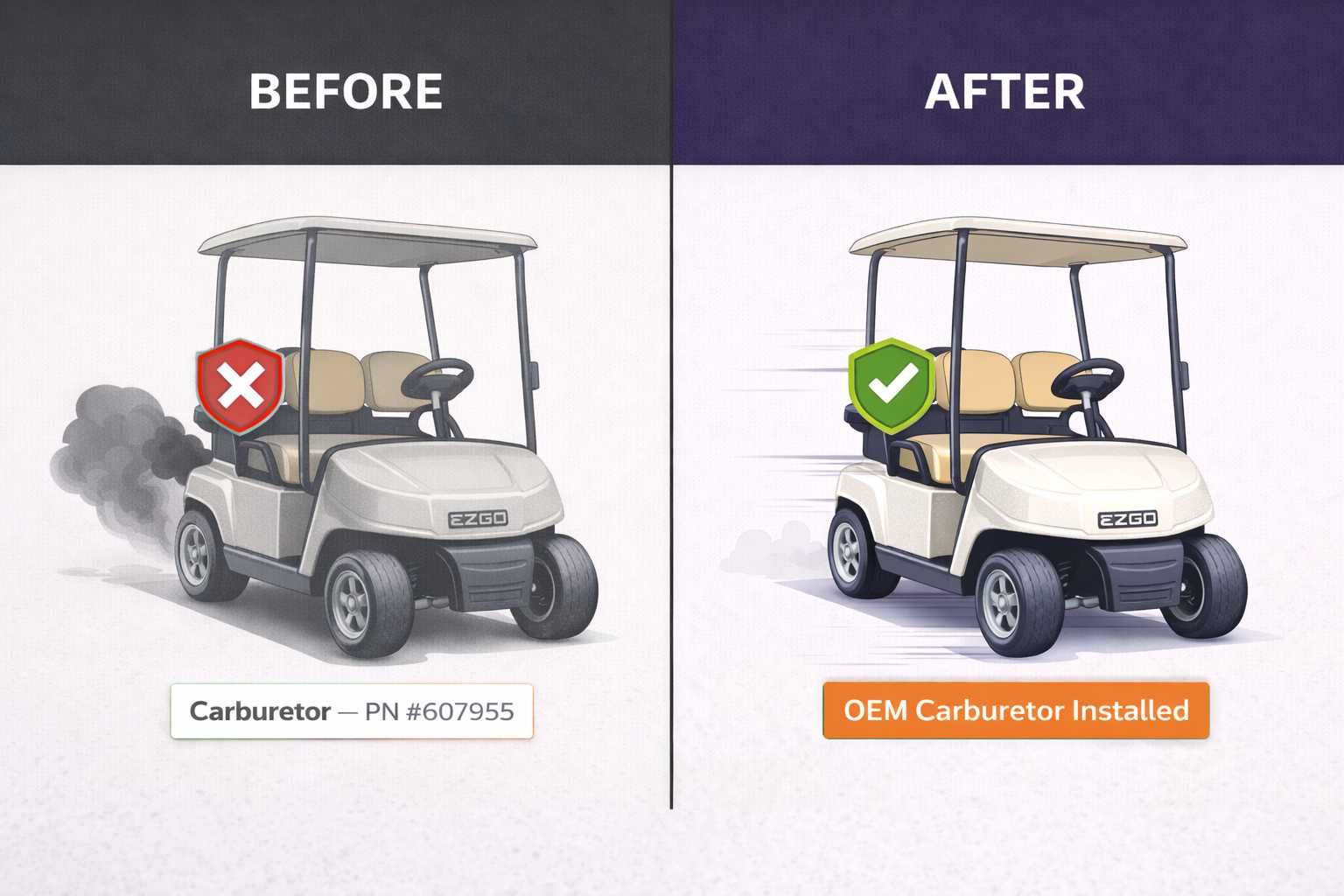
Installing the correct OEM EZGO carburetor resolves every symptom tied to fuel delivery and restores the engine to factory performance specifications. Owners consistently report a noticeable improvement immediately after the first start.
Jim McGaha, a Carts & Parts customer whose cart was diagnosed accurately before an unnecessary engine replacement:
“These guys are very honest and helpful with my cart repairs. I was expecting a replacement engine and they found other things wrong saving me close to a thousand dollars who can complain about that. Turn around time is the best less than 2 weeks. Great people to deal with. I wish I could give more stars. HIGHLY RECOMMENDED.”
A properly replaced carburetor produces measurable results:
- The engine starts on the first or second crank without choke engagement, even in cold conditions.
- Throttle response is immediate and linear, with no hesitation or surging at any speed.
- Engine oil stays clean between service intervals — no fuel contamination odor or milky appearance.
- Full power under load is restored, and the engine maintains consistent speed without hunting or bogging.
Get Professional EZGO Carburetor Replacement
Carts & Parts stocks genuine OEM EZGO carburetor parts for every Kawasaki and Robins engine variant, with free shipping on orders over $50 and more than 2,000 five-star reviews from cart owners nationwide.
The team identifies the correct part for your exact model year and engine type before the order ships, no guesswork, no returns for wrong fitment.
Call (937) 459-8891 to confirm the right ezgo carburetor for your cart today.
Frequently Asked Questions About EZGO Carburetor