


EZGO gas motor systems power every gas TXT, RXV, and Valor with a pedal activated engine that runs only while you drive.
Your cart hesitates for a second before the engine catches.
Power fades halfway up a hill you climbed easily last season.
A rough idle shakes the whole frame while you wait at the barn.
Few things frustrate an owner more than a machine that ran perfectly last month and stumbles today. Guessing at the cause burns money on parts you never needed.
Every symptom traces back to a handful of systems inside the engine compartment. Owners who know how those systems work catch problems early and skip the expensive failures, and the knowledge also makes every parts order faster and more accurate.
Three problems show up most often:
- Hard starting caused by stale fuel or a dirty carburetor.
- Power loss on hills from a slipping belt or worn clutch.
- Rough running traced to spark, air, or fuel restrictions.
Carts & Parts, an authorized EZGO dealer, stocks the OEM parts and know how to fix all three. Read on to learn how your EZGO gas motor works, which engine your cart carries, and what keeps it reliable for thousands of hours.
Key Takeaways
What engine is in an EZGO gas golf cart?
EZGO gas golf carts built from 2008 to 2019 use the Kawasaki FJ400D, a 401cc single cylinder engine rated at 13.5 horsepower. Carts built in 2020 and later carry the fuel injected EX1 engine, while pre 2003 models use Robin or Fuji MCI engines. The code plate on the fan shroud confirms which engine your cart has.
How long does an EZGO gas motor last?
An EZGO gas motor typically delivers 2,000 to 2,500 hours of service before a rebuild becomes necessary. Recreational carts with regular oil changes and clean filters can pass 3,000 hours, while heavy commercial use shortens life to around 1,500 hours.
How does the EZGO gas motor start?
The EZGO gas motor starts when the pedal microswitch signals the solenoid to send battery power to the starter generator, which spins the crankshaft until combustion takes over. Releasing the pedal shuts the engine off, so the motor never idles.
What Is the EZGO Gas Motor and How Does It Work?
The EZGO gas motor is a single cylinder, four cycle gasoline engine, the Kawasaki FJ400D on 2008 to 2019 carts and the fuel injected EX1 on 2020 and newer models, that runs only while the accelerator is pressed.
Unlike a car engine, the motor never idles. Press the pedal and the engine fires, release it and the engine stops.
The no idle design saves fuel, cuts noise, and reduces wear on every internal component. Our EZGO Golf Cart Parts Guide maps how the engine connects to every other system on the cart.
| Model Years | Engine | Cycle | Key Traits |
|---|---|---|---|
| 1989 to 1994 | Robin EC25 (244cc) | 2 cycle | Oil mixed with fuel, compact, higher pitched exhaust tone. |
| 1991 to 2002 | Robin / Fuji MCI (295cc and 350cc) | 4 cycle | Separate oil reservoir, quieter operation, better fuel economy. |
| 2008 to 2019 | Kawasaki FJ400D (401cc, 13.5 HP) | 4 cycle | Smooth torque, long service intervals, most common engine in service. |
| 2020 to current | EZGO EX1 | 4 cycle EFI | Electronic fuel injection, Smart Engine Management, auto idle shut off. |
Source: E-Z-GO engine specifications by model year. Confirm your engine on the code plate before ordering.
Which Components Make the EZGO Gas Motor Run?
Seven components work in sequence every time the Kawasaki or EX1 engine fires, and a failure in any one of them breaks the chain.
- Battery supplies the electrical energy for starting.
- Key switch allows voltage to flow only when the cart is switched on.
- Microswitch under the pedal sends the go signal.
- Solenoid transfers battery power to the starter circuit.
- Starter generator spins the engine to start it, then charges the battery while it runs.
- Igniter times each spark for clean combustion.
- Governor limits engine speed to protect internal parts.
Newer carts add electronic management on top of the mechanical chain. Smart Engine Management on the official EX1 engine page describes how the system monitors electrical loads and shuts down accessories the cart is not using.
How Do You Keep an EZGO Gas Motor Reliable?
Reliability on a Kawasaki FJ400D or EX1 engine comes down to two habits: genuine OEM parts and a consistent service schedule.
Aftermarket components vary in fit and tolerance. OEM parts match the factory specification the engine was tuned around.
Ordering the right part matters as much as installing it. Eddie found out how fast the process works when he placed his first order:
"I can't say enough about how pleased I am with my first transaction with Carts and Parts!!! I first reached out with a question on a Sunday afternoon, not expecting a reply until the next day, Monday. Much to my surprise, I get a text message asking how they could help within minutes of my request. What was obviously a "real" person answered my shipping question, then informed me that the part was in stock and could ship out the next morning. Here I am, 3 days later, on Wednesday and I find the part on my doorstep. 3 days after the order and my free shipping package is actually on my doorstep!!!!!! To top it all off, after a quick install of the part, my cart is back on the road!! YeeHaw!! As a retired senior, I had almost forgotten that this is how customer service used to be."
Experiences like his are why more than 2,000 customers have left online reviews, and why orders over $50.00 always ship free.
What Is the Fastest Way to Diagnose an EZGO Gas Motor Problem?
Work through the systems on a Kawasaki or EX1 cart in order and most problems reveal themselves within minutes.
- Identify your exact engine using the code plate so every part you order fits.
- Inspect the drive belt and clutches for glazing, cracks, or slip.
- Trace the fuel path from tank to carburetor for clogs and stale gas.
- Test spark plug condition and battery voltage before blaming the engine itself.
How Do You Identify Which EZGO Gas Engine You Have?
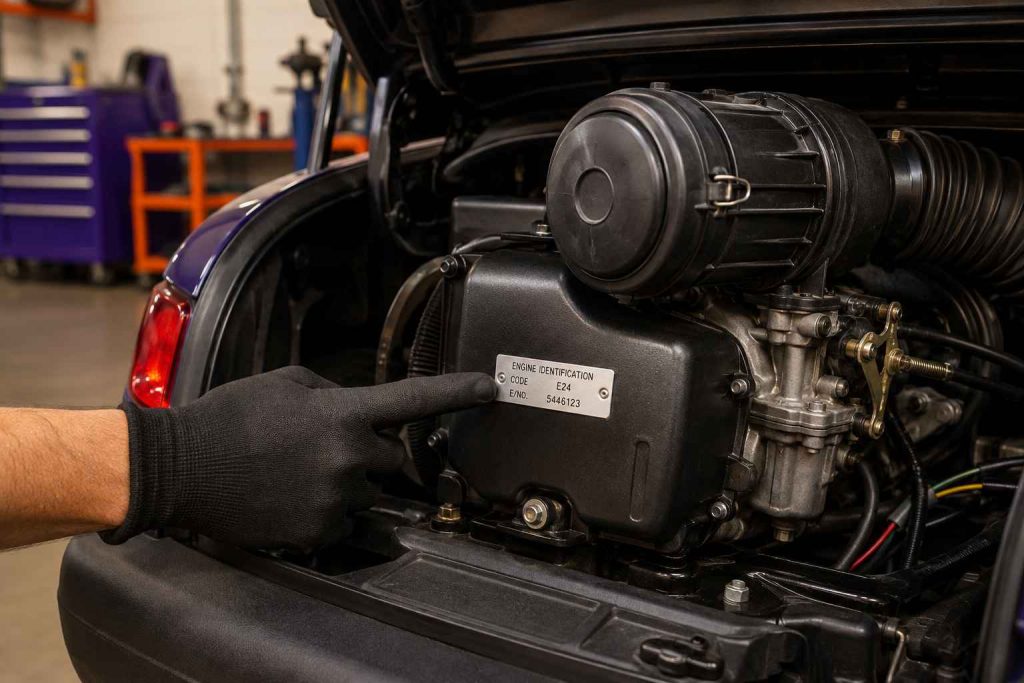
Engine identification starts at the code plate riveted to the fan shroud or frame crossmember on every TXT, RXV, and Medalist gas cart.
Write down the model number and displacement stamped on the plate. Compare those numbers against the year ranges in the table above.
Labels also appear under the seat or near the rear axle on some model years. A quick photo of each label saves time at ordering.
Your cart's serial number confirms the model year when the code plate is worn or missing. Our EZGO serial number lookup guide walks through decoding it in under a minute.
📝 Note: Even small design changes between model years affect part compatibility for carburetors, filters, and belts. Confirm the engine before ordering, not after.
Correct identification is the single biggest factor in getting the right part the first time. Everything else in this guide builds on it.
How Does the Clutch System Move Power From the Engine to the Wheels?
Power leaves the Kawasaki crankshaft through a CVT, a continuously variable transmission built from a primary clutch, a drive belt, and a secondary clutch.
At idle the primary clutch stays open and the engine spins freely. As RPM climbs, centrifugal weights squeeze the sheaves together and grip the belt.
Belt tension then rotates the secondary clutch on the transaxle, which drives the rear axle. Our EZGO drive belt guide covers inspection intervals and failure signs for the belt itself.
A worn driven clutch causes jerky takeoff, delayed engagement, and reduced hill power even with a fresh belt. The OEM EZGO Secondary Clutch PN# 624757 is the genuine TEAM Rapid Reaction replacement for Kawasaki clutch system carts.
💡 Tip: Match the clutch to the belt and drive clutch already on your cart. The 624757 driven clutch pairs with the 602000 Kawasaki drive clutch and 606136 belt.
Removal requires a dedicated puller because the clutches seat on tapered shafts. The E-Z-GO 13HP Kawasaki Drive and Driven Clutch Puller Tool PN# CP-0035 handles both clutches on all models with the 13 horsepower Kawasaki engine.
Every clutch component works as one system, and replacing parts in matched sets restores factory smooth acceleration. A full breakdown of the whole assembly lives in our EZGO clutch system guide.
Why does my EZGO jerk when accelerating?
Jerky acceleration on an EZGO gas cart usually means a stretched drive belt or a worn secondary clutch that no longer applies even belt pressure. Inspect both before replacing either, because a new belt on worn sheaves fails early.
What Maintenance Keeps the EZGO Gas Motor Running Strong?
Scheduled maintenance on the Kawasaki FJ400D and EX1 engines follows engine hours, not calendar months, with 50, 100, and 200 hour checkpoints.
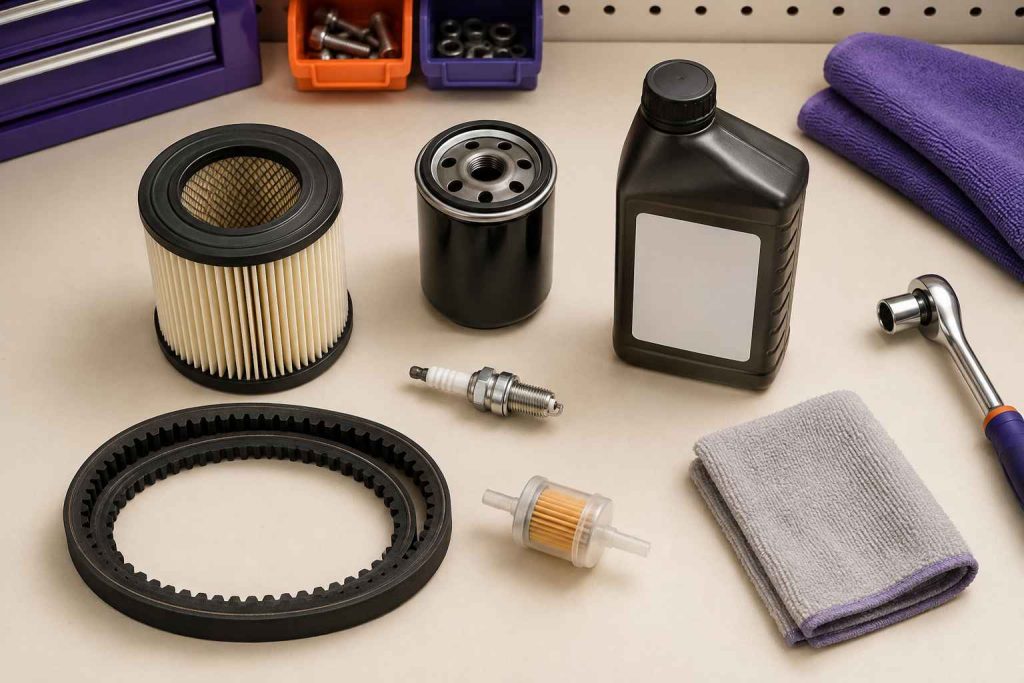
Change oil and the oil filter every 100 hours or once a year. Use 10W-30 in most climates and 10W-40 in sustained heat.
Fuel system care prevents the most common starting complaints. Our EZGO carburetor troubleshooting guide explains cleaning, adjustment, and when replacement beats another cleaning.
⚠️ Important: Never ignore a metallic knock. Metal on metal noise signals internal damage that grows more expensive every hour the engine runs.
Advice after the sale matters as much as the schedule. Brandon Bolser got both with one order:
"I ordered the part on Christmas eve and it came before new years. Part worked great. Jeff even reached out to make sure it came and everything went well and offered advice if I needed it."
Lines, filters, and the pump deserve the same attention as the carburetor. Our EZGO fuel system guide covers the full path from tank to engine.
What Kind of Motor Is in an EZGO Gas Golf Cart?
Most EZGO gas golf carts on the road today carry a four cycle engine: the Kawasaki FJ400D 13.5 horsepower unit in 2008 to 2019 TXT and RXV models, or the fuel injected EX1 in 2020 and newer carts.
Older carts tell a longer story. Models from 1989 to 1994 used the two cycle Robin EC25, and 1991 to 2002 Medalist and early TXT carts ran four cycle Robin and Fuji MCI engines in 295cc and 350cc versions.
Every generation burns regular unleaded gasoline rated 87 octane or higher. Ethanol content should stay at 10 percent or below to protect fuel system components.
Fuel delivery differs by generation. Carbureted Kawasaki engines rely on a vacuum operated pump, and our EZGO fuel pump guide shows how to diagnose weak delivery before replacing anything.
The engine in your specific cart depends on model year and series. TXT carts from 2003 to 2019 almost always carry the Kawasaki, while RXV carts split between Kawasaki and EX1 by production year.
How Long Do EZGO Gas Motors Last?
A well maintained EZGO gas motor runs 2,000 to 2,500 hours before compression loss, oil consumption, or persistent knocking signal rebuild time.
Usage pattern moves that number in both directions. Commercial duty shortens life to around 1,500 hours, while light recreational use with disciplined oil changes can pass 3,000 hours.
Rebuilding costs less than replacement and returns near original performance. A professional rebuild with new pistons, rings, bearings, and gaskets adds another 1,500 to 2,000 hours of service.
💰 Money-Saver: Before pricing a rebuild, confirm the problem is actually the engine. A slipping belt or tired clutch mimics a dying motor and costs far less to fix.
Drivetrain upgrades extend usable life on older carts. The OEM EZGO HD Team Clutch Upgrade Kit PN# 750410PKG converts 2008 to 2014 Kawasaki clutch carts to the newer TEAM setup with a matched drive clutch, driven clutch, and belt in one factory approved package.
Owners chasing performance beyond reliability have more options. Our guide on 8 ways to make your golf cart faster ranks the upgrades that actually work.
What Happens If You Ignore EZGO Gas Motor Problems?
Neglected Kawasaki and EX1 engines rarely fail alone, because each worn component overworks the parts around it.
- Engine seizure follows contaminated or low oil, and seizure means a full replacement rather than a repair.
- Belt failure strands the cart wherever it happens, often miles from the barn.
- Varnish from stale fuel hardens inside carburetor passages until cleaning no longer works.
- Dirt passing a clogged air filter scores the cylinder walls and forces a premature rebuild.
Small problems compound quickly. A slipping belt eats clutch sheaves, a dirty carburetor strains the fuel pump, and a fouled plug overworks the ignition coil.
Early attention costs a fraction of the failure it prevents. The service schedule above exists because every line item on it is cheaper than the damage it stops.
What Does Success Look Like for Your EZGO Gas Motor?
A properly maintained EZGO gas cart feels different the moment you press the pedal.
- Starts arrive instantly in any weather without long cranking.
- Acceleration stays smooth from takeoff to top speed with no hesitation.
- Hills that used to slow the cart become steady, quiet climbs.
- Service life passes 2,500 hours before any major work.
Distance is no barrier to keeping a cart in that condition. Greg Hier orders from three states away:
"Great price and free shipping. Shipped fast. Great communication. Cade was awesome. I'm in Texas but they might be my go-to parts source."
Nationwide shipping puts genuine OEM engine parts on any doorstep in days.
Get Professional EZGO Gas Motor Service
Carts & Parts is an authorized EZGO dealer backed by more than 2,000 online reviews, stocking genuine OEM parts for every gas engine generation from vintage Robin motors to the current EX1.
Browse the full parts catalog at carts-and-parts.com or call our technicians at (937) 459-8891 for fitment help before you order. Free shipping applies to every order over $50.00, nationwide.
Frequently Asked Questions About EZGO Gas Motors
What kind of oil does an EZGO gas motor use?
We recommend 10W-30 engine oil for most climates and 10W-40 for hot regions. Kawasaki and EX1 engines perform best with a synthetic blend or full synthetic formulated for small four cycle engines. Older two cycle Robin engines instead mix oil directly with the fuel.
How often should I change the oil in my EZGO gas motor?
We change the oil and filter every 100 hours of operation or once a year, whichever comes first. Check the level monthly and top off when it drops. Dusty conditions and frequent short trips call for more frequent changes to limit internal wear.
How long does an EZGO gas motor last before a rebuild?
A well maintained engine runs 2,000 to 2,500 hours before rebuild or replacement. Regular tune ups, clean filters, and correct oil levels extend that significantly. Commercial duty shortens lifespan to around 1,500 hours, while careful recreational use can pass 3,000 hours.
Why does my EZGO lose power on hills?
Power loss under load usually starts with a slipping drive belt, a worn clutch, or a weak fuel pump. We inspect those three before suspecting the engine itself. A clogged fuel filter or dirty carburetor can also starve the engine when demand rises.
Can I use aftermarket parts on my EZGO engine?
We recommend genuine OEM components for the carburetor, fuel system, and drivetrain because factory tolerances keep the whole system in balance. Aftermarket parts vary in fit and durability, and critical engine components deserve the quality assurance that OEM parts carry.
How can I make my EZGO gas cart faster?
We start with maintenance, because a new drive belt, a clean carburetor, and a properly adjusted governor recover most lost speed. Beyond that, high speed gears or a performance clutch add top end when installed and tested gradually.
What causes an EZGO gas engine to smoke?
Blue smoke means oil is burning, usually from an overfilled crankcase or oil reaching the combustion chamber. Black smoke points to a rich fuel mixture needing carburetor adjustment. We correct the oil level first and confirm the air filter is clean and dry.
How should I store an EZGO gas cart for winter?
Run the engine until the carburetor empties, add fuel stabilizer to the tank, and disconnect the battery. Store the cart in a dry, covered space. We check oil level, fuel quality, and tire pressure before the first spring start.
What fuel should I use in my EZGO gas motor?
Your engine runs best on regular unleaded gasoline rated 87 octane or higher with no more than 10 percent ethanol. The Department of Energy's ethanol blends guide explains blend labeling at the pump. Higher ethanol content damages fuel system components over time.
Why does my EZGO backfire when starting?
Backfiring points to ignition timing issues or a lean fuel mixture. We check carburetor adjustment, spark plug gap, and air filter condition first. Stale fuel or water contamination also causes backfire and calls for a full fuel system cleaning.
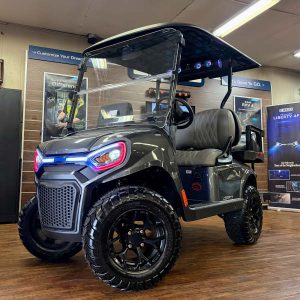
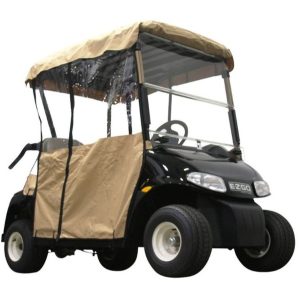
My gas golf cart clutch’s are not working like they should. I also have an electric par car that doesn’t take off every time push on the pedal.
Hi Terry,
Sounds like you’ve got two separate issues going on, so let’s take them one at a time.
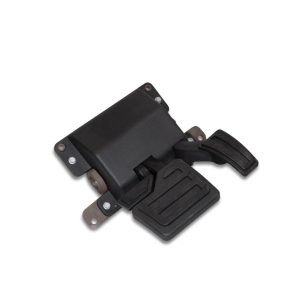
On the gas cart, clutch trouble usually shows up as sluggish takeoff, poor top speed, or the engine revving without the cart pulling as it should. The most common culprits are a worn or glazed drive belt, a primary (drive) clutch that’s gummed up and not moving freely on the shaft, or worn sheaves and weights inside the clutch.
A good first check is to pull the belt and inspect it for cracks, glazing, or a narrow spot, then see whether the primary clutch slides open and closed smoothly. If it’s sticking, a thorough cleaning sometimes brings it back, but if the sheaves are scored or the bushings are shot, a rebuild or replacement is the fix.
The Par Car is a different animal. When an electric cart takes off some of the time but not every time you press the pedal, the usual suspects are the accelerator microswitch or throttle sensor, the solenoid, or corroded battery cables and terminals.
Wiggle the pedal and listen for a click at the solenoid. If you get a click but no movement, the solenoid contacts may be burned. If there’s no click at all on the bad presses, the microswitch or pedal sensor is likely the problem. It’s also worth cleaning every battery connection and checking cable ends, since a loose or corroded terminal will cause exactly this kind of intermittent behavior.
If you’d rather not chase it yourself, we can diagnose both carts and get you the right parts. Give us a call at (937) 459-8891 and we’ll walk you through it or get you scheduled.