What Do You Need Before You Jack Up a Golf Cart?
A floor jack, jack stands, wheel chocks, and a lug wrench are the four non-negotiable tools for safely jacking a golf cart. Skipping any one of them creates a real hazard.
Here is what to gather before you start:
- Hydraulic floor jack rated for at least 1,500 lbs.
- Jack stands rated to match or exceed the cart’s weight, used in pairs.
- Wheel chocks: rubber wedges placed in front of and behind the wheels that stay on the ground.
- Lug wrench sized for your cart’s lug nuts (typically 3/4″ or 13mm).
- Gloves and safety glasses to protect against slippage or debris.
- Flat concrete surface: a driveway or garage floor is ideal.

Where Are the Jack Points on a Golf Cart?
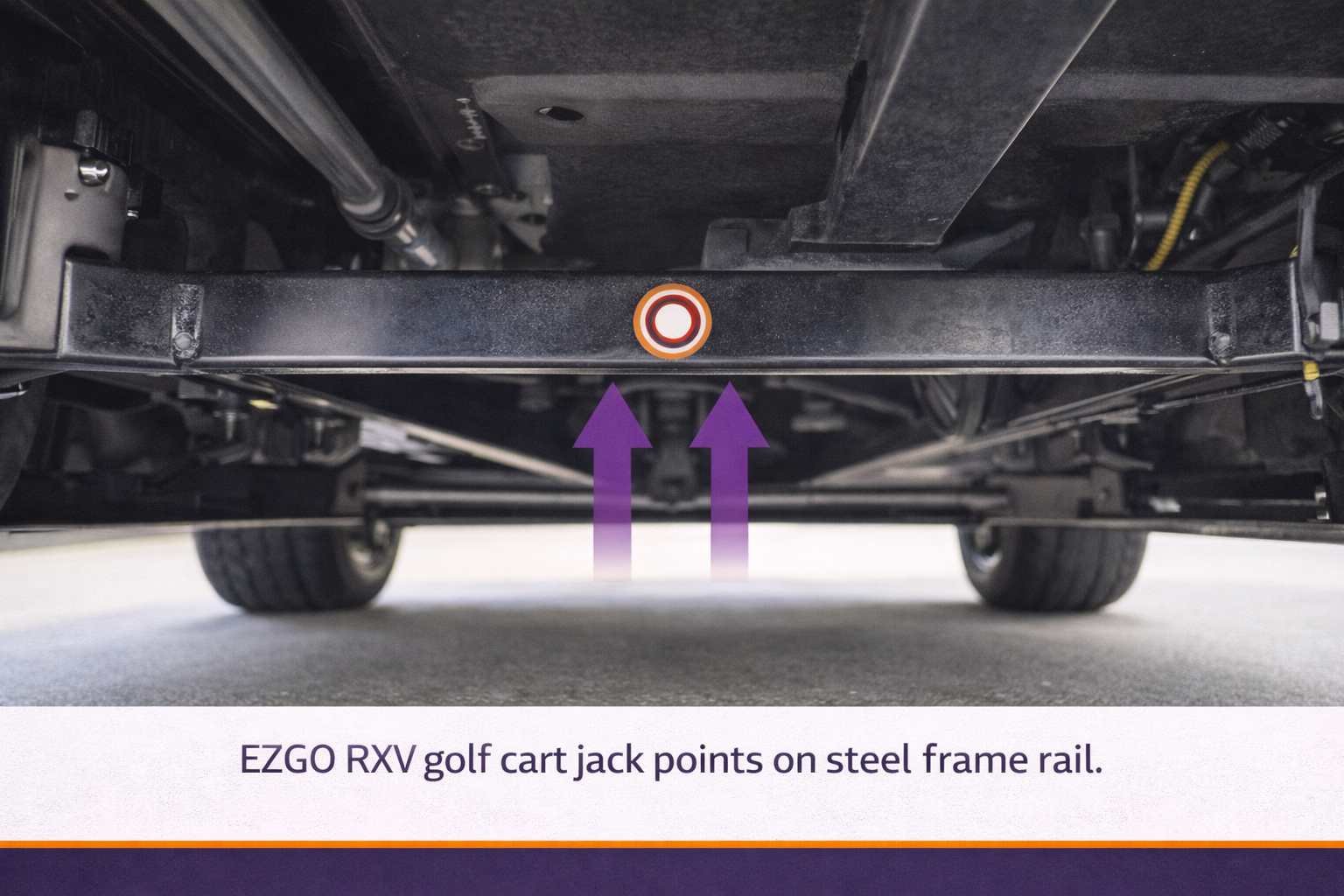
EZGO TXT, RXV, and Valor models share the same fundamental jacking principle: always place the jack under the steel frame rail, never under plastic, fiberglass, or suspension components.
The steel frame rails run along both sides of the cart from the front axle area to the rear crossmember. On most EZGO RXV models, lift points are marked with a triangular stamp or the word “JACK” near the approved contact area. If you cannot locate a marking, consult your owner’s manual before lifting.
How Do EZGO TXT and RXV Jack Points Differ?
EZGO TXT carts, produced from 1994 to the current models, use a traditional ladder-style steel frame with jack contact points at the front and rear of each frame rail. The EZGO RXV platform, introduced in 2008, uses a unitized body-frame design with slightly different jack-point positioning to accommodate battery placement and motor assembly location.
On the RXV, avoid placing the jack directly under the rear motor housing or battery tray. Contact should always be made on the outer frame rail sections. When in doubt, the rear crossmember at the very back of the cart is a reliable secondary jack point for rear-end lifts on both TXT and RXV models.
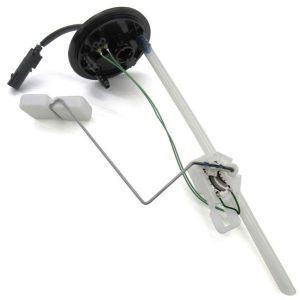
Owners performing more than a simple tire change may also want to consider the OEM EZGO Golf Cart Jack-Up Axle Weldment, Part #633795 (SKU 633795). This is a genuine EZGO replacement weldment that provides the correct structural base for jacking and axle-related work, ensuring the factory geometry is maintained during suspension or axle service.
How Do You Jack Up a Golf Cart Step by Step?
Jacking a golf cart safely requires eight specific steps completed in the correct order. Skipping steps or rushing the process is where accidents happen.
- Park on flat, solid concrete. Grass, gravel, and sloped driveways cause jacks to sink or tip. Concrete provides the firm, level base that the jack needs.
- Engage the parking brake fully. A partially engaged brake will not hold the cart when the weight shifts during lifting.
- Turn off the cart and remove the key. On electric carts, engage the battery disconnect if one is installed. On gas carts, make sure the engine is off and cooled.
- Chock the wheels that stay on the ground. Place chocks in front of and behind at least two wheels opposite the end you are lifting. If lifting the rear, chock the front wheels.
- Loosen lug nuts before lifting. Breaking lug nuts loose while the tire is still on the ground prevents the wheel from spinning. Loosen each nut about one full turn counterclockwise, but do not remove them yet.
- Position the floor jack under the frame rail jack point. Slide the jack head under the frame rail at the marked or confirmed lift point. Ensure the jack’s saddle contacts steel, not plastic.
- Raise the cart slowly until the tire clears the ground by about two inches. Watch for any movement or shifting. Stop immediately if the cart rocks or the jack shifts.
- Place jack stands under the frame and lower the cart onto them. Position the jack stands under the solid frame sections on each side. Lower the jack until the cart rests on the stands, then remove the jack from under the cart before working.
Kevin Heaney found out firsthand how seriously a professional shop treats this kind of work when he brought his EZGO gas cart in for electrical diagnosis and service:
“Called and talked to Cole yesterday. He said to bring it by today and wait on it. Should only take about 60 Minutes. He thought it could be one of three things. I live 90 minutes away and thought it would require two trips. Arrived at 10:00 am and left at 11:00 am. Problem taken care of along with a tuneup and service. Fantastic customer service from a Family that cares. Thank You Jeff, Cole and Cade.”
That kind of efficient, methodical service starts with doing the basics correctly, and jacking is always step one.

What Type of Jack Works Best for a Golf Cart?
Floor jacks, scissor jacks, and bottle jacks are the three types most commonly used on golf carts, and they are not equally suited for the job.
A hydraulic floor jack is the top choice for most owners. The low-profile saddle slides easily under a standard golf cart frame, and the long handle gives you controlled, even lifting without cranking hard. Look for a floor jack with a minimum saddle height of 3 to 3.5 inches to fit under carts with factory ground clearance.
A scissor jack is compact and stores easily, making it a good option for roadside tire changes. On carts with very low clearance, you may need to partially raise the cart on a ramp or board first to get the scissor jack underneath.
Bottle jacks are tall and narrow, which creates stability issues for lightweight carts. The narrow base can rock when the cart shifts weight during lifting. Most experienced technicians avoid bottle jacks on golf carts for this reason.
According to OSHA standard 29 CFR 1910.244, the operator must confirm the jack’s rated load is sufficient to lift and sustain the load before use. The rated capacity must be clearly marked on the jack. For more on Jack’s safety requirements, see the full standard at https://www.osha.gov/laws-regs/regulations/standardnumber/1910/1910.244.

Does Jacking Up a Golf Cart Lead to a Permanent Lift?
Jacking is a maintenance task. Lifting is a permanent modification. The two are connected but different, and understanding that distinction matters for owners considering either.
Jacking raises the cart temporarily so you can change a tire, inspect brakes, or service the drivetrain. The cart returns to its original height when the work is done. A lift kit permanently raises the cart’s body by modifying the suspension geometry, enabling larger tires and greater ground clearance.
What Is a Jack-Up Axle Weldment and Do You Need One?
A jack-up axle weldment is an OEM-replacement structural component used in axle service and lift-related modifications for specific EZGO models.
The OEM EZGO Golf Cart Jack-Up Axle Weldment, Part #633795 (SKU 633795), is a genuine Textron/EZGO weldment designed to maintain factory tolerances when the rear axle assembly is serviced or repositioned during a suspension upgrade.
Owners replacing a bent or damaged rear axle weldment, or those performing certain lift kit installations, will need this component to ensure the axle geometry returns to spec. Using an aftermarket substitute risks alignment problems and premature wear on tires and bearings.
Janet and John Malone went with the professionals when they wanted their cart lifted and ready to run:
“Great company to deal with. Very knowledgeable on all the aftermarket out there for my cart and they got it lifted and street legal in 3 days. I’m extremely satisfied.”
Getting the axle and suspension components right from the start is exactly what makes that kind of fast turnaround possible.
Which OEM EZGO Lift Kits Fit 2022 to 2025 RXV and Valor Models?
EZGO offers model-specific, factory-engineered lift kits for current RXV and Valor platforms that maintain warranty integrity and proper suspension geometry. Three kits cover the 2022 to 2025 range:
OEM EZGO RXV Golf Cart 5-Inch Ultimate Lift Kit, Genuine EZGO Part #PF11705 (SKU PF11705): A 5-inch lift designed for maximum clearance on RXV platforms. Pairs well with larger all-terrain tires.
OEM EZGO 4″ Lift Kit RXV/Valor Electric 2022-2025, PN# 10047547 (SKU 10047547): The correct factory 4-inch lift for electric-powered RXV and Valor carts. Designed specifically around the electric motor and battery placement of these models.
OEM EZGO 4″ Lift Kit RXV/Valor EX1 Gas 2022-2025, PN# 10047543 (SKU 10047543): The gas-specific version for Valor carts equipped with the EX1 engine. Uses a different geometry than the electric kit to account for the engine placement and exhaust routing.
Pairing any of these lift kits with the correct tire size is critical. Check tire size for a full guide on selecting the right tire dimensions after a lift. New wheels and covers should also match the new stance. See wheels & covers for compatible options.

How Do You Change a Tire on a Golf Cart After Jacking It Up?
Changing a tire on an EZGO TXT or RXV after the cart is safely on jack stands follows a straightforward sequence that takes most owners 20 to 30 minutes with the right tools.
Here is the process from loosened lug nuts to finished install:
- Confirm the cart is stable on jack stands before removing any lug nuts completely.
- Remove the loosened lug nuts fully and place them somewhere they will not roll away.
- Pull the tire straight off the hub. EZGO wheels use a 4-bolt or 5-bolt pattern, depending on model year.
- Mount the new or repaired tire onto the hub. Align the bolt holes and hand-thread the lug nuts to avoid cross-threading.
- Tighten the lug nuts in a crisscross pattern by hand until snug.
- Raise the cart off the jack stands using your floor jack, remove the stands, and lower the cart to the ground.
- Finish tightening the lug nuts in a crisscross pattern with the lug wrench once the tire is on the ground and no longer spins.
- Check for wheel wobble by gently rocking the cart before moving it.
Always torque lug nuts to the manufacturer’s specification for your specific model. Consult your EZGO owner’s manual or the service documentation for the correct torque value, typically between 55 and 80 ft-lbs, depending on wheel size and bolt pattern.
What Happens If You Jack Up a Golf Cart Incorrectly?
Improper jacking is one of the fastest ways to turn a minor maintenance task into a major repair bill. Damage from incorrect lifting is rarely covered under warranty because it results from owner error.
The most common consequences of incorrect jacking include:
- Cracked or deformed plastic body panels when a jack contacts the rocker panels or skirting instead of the steel frame rail.
- A bent or cracked battery tray can result from placing the jack under the battery compartment on electric carts.
- Damaged A-arm mounting points or bushings when the jack contacts the suspension components instead of the frame.
- Cart tip-over or fall occurs when the jack is placed on uneven ground or soft soil, or when the cart is raised above the required height without jack stands in place.
A cart that falls off a jack can cause bent frames, cracked body panels, damaged axles, and serious personal injury. The repair cost for a tipped cart almost always exceeds the cost of doing the job correctly in the first place.
What Does Successful Golf Cart Maintenance Look Like?
Done right, a properly jacked and serviced golf cart runs cleaner, handles better, and lasts longer. Owners who stay ahead of maintenance avoid the unexpected failures that leave carts sitting idle.
Owners who take maintenance seriously see these results:
- Tire changes completed in under 30 minutes with the right jack, stands, and tools on hand.
- Brakes, axles, and suspension components are inspected on schedule rather than only when something goes wrong.
- The lift kit and wheel upgrades were installed the first time correctly, using the correct OEM components.
- Confidence working under the cart knowing it is safely supported and will not shift.
Randy Goines described what a full-service upgrade experience looks like when everything is done right:
“The people at Carts & Parts converted our cart to a lithium battery, installed a lift along with a few other convenience upgrades. Their workmanship and quality was excellent. I would recommend them if I was in the market for upgrades or a new cart.”
That combination of lift, battery upgrade, and accessories all done at once is exactly the kind of comprehensive service that delivers lasting results.
Get Professional Golf Cart Lifting and Maintenance Help
Carts & Parts is an authorized EZGO dealership with a full service department ready to handle everything from a basic tire change to a complete lift kit installation.
With more than 2,000 five-star reviews and free shipping on parts orders over $50, the team at Carts & Parts makes it easy to get your cart serviced right. Call (937) 459-8891 to speak with a technician or order OEM EZGO parts online with nationwide delivery.
Frequently Asked Questions About How to Jack Up a Golf Cart