Golf carts have outgrown their original purpose in remarkable ways.
These versatile vehicles now serve as essential utility solutions for property management, small businesses, community services, and family transportation.
The transition from recreational vehicle to practical workhorse reflects growing recognition of their efficiency, economy, and adaptability.
Many property owners struggle with practical challenges that traditional vehicles can’t effectively address.
Large trucks cannot navigate tight spaces, ATVs lack passenger capacity, and standard utility vehicles often have prohibitive price tags.
This creates a frustrating gap between transportation needs and available solutions, particularly for property maintenance, small-scale hauling, and multi-purpose usage.
Today’s enhanced golf carts fill this gap with remarkable efficiency, providing practical utility without sacrificing the convenience and economy that made them popular in the first place.
Practical Solutions For Real-World Challenges

Throughout our years of helping customers find the right vehicles for their needs, we’ve seen a dramatic shift in how golf carts are utilized.
Increasingly, the conversation focuses on practical applications beyond basic transportation – from property management to business operations to family activities.
We’ve learned that most utility challenges don’t require massive vehicles or specialized equipment.
The ideal solution combines appropriate capacity with maneuverability, accessibility, and cost-effectiveness.
This understanding guides our approach to helping customers configure carts that deliver genuine utility for their specific requirements.
The versatility of modern golf carts creates practical solutions for challenges that once required multiple specialized vehicles or remained frustratingly unsolved.
Your Multi-Purpose Utility Transformation Plan

Step 1: Assess Your Core Utility Needs
The foundation of a practical utility cart begins with a clear understanding of your specific requirements.
Key utility considerations include:
- Primary cargo types (tools, supplies, equipment, or materials)
- Typical loading patterns (frequent small loads vs. occasional large loads)
- Terrain conditions (maintained paths, rough ground, or varied surfaces)
- Weather exposure (seasonal or year-round operation)
- Passenger requirements alongside utility functions
- Storage limitations when not in use
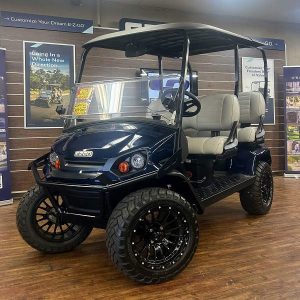
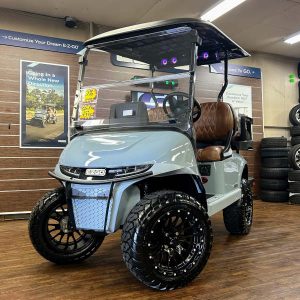
EZGO’s utility-focused models offer specialized platforms designed specifically for these applications. The Valor and Freedom platforms provide excellent foundations for customized utility builds.
Step 2: Select the Right Cargo Solutions
Effective cargo management transforms a basic cart into a practical utility vehicle.
Versatile cargo options include:
- Rear cargo beds with folding tailgates for flexible loading
- Convertible rear seating that transforms into cargo space when needed
- Reinforced roof racks for carrying ladders, lumber, or oversized items
- Specialized tool mounts that secure equipment while maintaining accessibility
- Enclosed cargo boxes for weather-sensitive materials
- Towing packages for trailers and towable equipment
- Tiered shelving units for organized small-item storage
These cargo enhancements create practical solutions for specific hauling needs while maintaining the maneuverability that makes golf carts so effective.
Step 3: Implement Task-Specific Accessories
Specialized accessories complete the transformation from basic transportation to purpose-built utility vehicle.
Valuable utility enhancements include:
- All-terrain tire packages for improved traction in various conditions
- Heavy-duty suspension upgrades for increased load capacity
- Front-mounted tool attachments for specialized functions
- Enhanced lighting packages for early morning or evening work
- Power outlets for tools and equipment
- Access ramps for effortless loading of wheeled equipment
- Winch systems for recovery or loading assistance
These focused enhancements create task-specific functionality while preserving the core benefits of golf cart platforms.
Real-World Applications That Deliver Value

The properly equipped utility golf cart transforms property management in practical ways.
The gardener navigates narrow garden paths with tools and materials, accessing spaces that would damage lawns if approached by larger vehicles.
The maintenance worker transports repair supplies throughout a property without the noise, emissions, and expense of traditional utility vehicles.
Small business owners discover operational advantages that improve efficiency and reduce costs.
The event coordinator moves supplies across venue spaces without disrupting guests.
The small-scale farmer transports harvested produce from the field to the processing area without soil compaction from heavier vehicles.
The retail business owner shuttles inventory from storage to display areas with minimal effort.
Families benefit from versatility that enhances recreational activities.
Camping enthusiasts transport gear from parking areas to campsites with ease.
Beach visitors carry coolers, chairs, and equipment without exhausting their carrying capacity.
Community services find golf carts ideal for specific operational needs.
Security personnel patrol large properties efficiently and economically.
First responders navigate crowded events or narrow pathways inaccessible to traditional emergency vehicles.
Community volunteers provide transportation assistance for elderly or disabled residents during local events.
The common thread through these varied applications is versatility that delivers practical value by addressing specific challenges with appropriate scale and capability.
Configuring Your Ideal Utility Solution

Creating an effective utility cart begins with understanding how the vehicle will integrate into your activities and operations.
Our consultation process explores nuanced aspects of your requirements—not just what you need to carry but also how you’ll load it, access it, and use it in real-world conditions.
This detailed understanding ensures recommendations that deliver practical value rather than unnecessary complexity.
The configuration process prioritizes modular solutions whenever possible, allowing adaptation as your needs evolve.
Many utility accessories can be installed or removed as seasonal requirements change, creating multi-functional versatility from a single vehicle.
Custom fabrication services create purpose-built solutions for those with specialized requirements that perfectly match unique operational needs.
Custom fabrication creates unique solutions like specialized mounting systems and cargo configurations. These purpose-built additions effectively address challenges that standard accessories cannot solve.
Conclusion
The transformation from basic golf cart to purpose-built utility vehicle creates practical benefits that extend far beyond convenience.
These versatile solutions improve operational efficiency, reduce costs, minimize environmental impact, and solve practical challenges that larger or more specialized vehicles cannot effectively address.
Carts & Parts creates utility-focused golf cart solutions through thoughtful configuration, quality components, and practical expertise.
Our understanding of real-world applications allows us to recommend enhancements that deliver genuine utility value for your requirements.
Ready to explore utility options for your property or operations? Contact Carts & Parts at (937) 459-8891 or visit our showroom at 1035 N Columbia St, Union City, IN.
We offer comprehensive utility packages with professional installation and hassle-free financing options to make your utility transformation affordable.
Beyond utility enhancements, we also offer new and pre-owned carts, comprehensive service, and customization options to create the perfect multi-purpose vehicle for your specific needs.
FAQs
What’s the typical load capacity for a utility-configured golf cart?
Standard utility-configured golf carts typically handle 800-1,000 pounds of combined passenger and cargo weight.
Enhanced suspension systems can increase this capacity to 1,200-1,500 pounds for specific applications requiring heavier loads.
Weight distribution remains important regardless of capacity, as properly balanced loads improve handling, reduce wear, and prevent premature component failure.
How do utility modifications affect speed and range?
Utility enhancements typically reduce top speed by 10-15% and range by 15-20% when fully loaded.
This modest reduction reflects the increased power requirements for moving heavier loads.
For electric models, battery upgrades can offset these reductions for applications requiring extended range and significant carrying capacity.
Can utility golf carts handle rough terrain?
Enhanced utility carts with appropriate tire and suspension upgrades handle moderately rough terrain effectively.
While not designed for extreme off-road conditions, they navigate fields, gravel roads, packed sand, and similar surfaces with excellent capability.
All-terrain packages enhance this capability for applications requiring regular operation beyond maintained surfaces.
What separates a utility golf cart from a UTV?
Utility golf carts offer smaller footprints, lighter weight, and more straightforward operation than UTVs, making them ideal for applications where maneuverability and economy are priorities.
For applications requiring these capabilities, UTVs typically provide greater load capacity, more ground clearance, and higher top speeds.
The cost difference is substantial. Fully equipped utility golf carts typically cost 40-60% less than comparable UTVs.
Can a single cart serve both passenger and utility functions?
Convertible systems allow many carts to alternate between passenger and utility configurations.
Flip-seat rear benches transform from seating to cargo beds in seconds, creating dual-purpose functionality.
Removable cargo accessories allow further customization for specific events or seasonal activities without permanent modifications.
What maintenance considerations exist for utility-configured carts?
Utility applications typically require frequent maintenance due to increased loads and operational demands.
Tire pressure, brake adjustment, and suspension components require particular attention when regularly carrying heavy loads.
We recommend maintenance schedules based on specific usage patterns, typically including more frequent inspections than passenger-only applications.
Are there limits to what can be added to a golf cart platform?
Engineering constraints do create practical limits for golf cart modifications.
Weight distribution, frame strength, and drive system capacity must be respected to maintain safety and reliability.
Our assessment process identifies these constraints for your specific cart model, ensuring that all recommendations preserve operational safety and vehicle longevity.
How do utility golf carts perform in winter conditions?
Properly equipped utility carts operate effectively in light to moderate winter conditions.
Tire selection significantly impacts winter performance, with specialized tires available for improved traction.
Weather enclosures and heating systems extend operator comfort in cold conditions, though extreme snow depths remain beyond the practical capability of even enhanced carts.