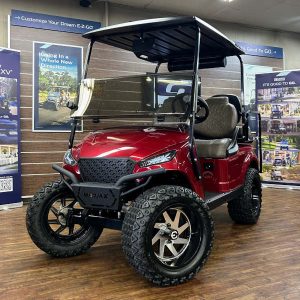
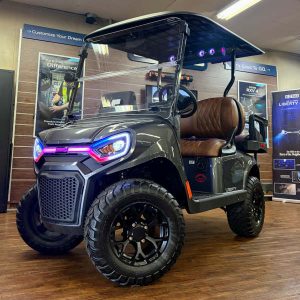
The days of noisy, fume-producing gas golf carts are rapidly fading into the past.
As climate concerns grow and technology advances, more property owners are switching to electric golf carts for daily transportation.
Electric golf carts represent more than eco-friendly transportation. They signal a transformation in neighborhood mobility solutions.
Many current golf cart owners find themselves at a crossroads when their gas-powered models require costly maintenance or when fuel prices spike unexpectedly.
The frustration of dealing with carburetors, oil changes, and engine noise leaves them wondering if there’s a better alternative.
Beyond these practical concerns lies a deeper question: Shouldn’t our transportation choices reflect our values regarding sustainability and community impact?
Thankfully, recent innovations in battery technology have created electric options that surpass gas models in nearly every category, transforming what was once a compromise into a clear advantage.
Why Electric Golf Carts Represent The Future Of Personal Transportation

Our decades of experience in the golf cart industry have given us a front-row seat to the electric revolution.
We’ve watched battery technology evolve from basic lead-acid systems to sophisticated lithium powertrains that deliver unprecedented performance and convenience.
We understand the hesitation some customers feel about making the switch.
Questions about range, power, and longevity often dominate these conversations.
That’s why we approach each customer consultation as an educational opportunity, helping them understand how today’s electric technology addresses historical limitations.
As Tony Bidlack, who recently purchased an EZGO electric cart from us, shared: “Jeff and the whole crew are great to work with. Communication was impeccable after we had spec’d out our golf cart and they even helped us sell our Polaris Ranger online. Great experience all the way around and can’t wait to cruise the streets in our new EZGO!”
Making the right choice requires understanding the key advantages of modern electric carts and how they can transform your ownership experience.
Your 3-Step Electric Conversion Plan

Step 1: Understand the Battery Technology Revolution
The first step in switching to electric is understanding how dramatically battery technology has evolved in recent years.
🔋 Consider these transformative advances:
- Modern lithium batteries weigh significantly less than traditional lead-acid batteries
- EZGO’s ELiTE Lithium system requires zero maintenance compared to the regular watering needs of lead-acid
- Advanced battery management systems prevent damaging over-discharge
- New batteries deliver consistent power throughout the discharge cycle, unlike old technology that weakened as charge depleted
- Expected lifespan has more than doubled with proper care
- Charging time has decreased dramatically with smart charging technology
These improvements mean today’s electric carts deliver power and performance that match or exceed their gas counterparts without the maintenance headaches.
Step 2: Calculate the Long-Term Cost Benefits
The transition to electric makes compelling financial sense when you examine the total cost of ownership over time.
🔋 Consider these economic factors:
- Electricity costs approximately 70-80% less than gasoline for equivalent usage
- Electric motors contain far fewer moving parts, reducing maintenance needs and costs
- No more oil changes, spark plugs, air filters, or carburetor adjustments
- Reduced noise means less stress on mechanical components
- EZGO’s Freedom RXV electric model retains higher resale value than comparable gas models
- Many communities offer incentives for switching to electric vehicles
Rick Rittenhouse, another satisfied customer, noted: “Very friendly. Helpful and professional. The only problem they have is so many carts to choose from. Just kidding not a problem just makes it harder to decide which one you want.”
Step 3: Choose the Right Electric Model for Your Needs
With the foundational knowledge in place, selecting the perfect electric cart involves matching features to your specific usage requirements.
🔋 Key considerations include:
- Passenger capacity: EZGO’s lineup ranges from two-seat models to the six-passenger Valor 6
- Terrain conditions: Different motor configurations are optimized for flat neighborhoods versus hilly terrain
- Range requirements: Battery capacity can be customized based on typical daily usage
- Speed needs: Controllers can be programmed for various maximum speeds
- Charging infrastructure: Options range from standard outlet charging to solar integration
- Weather conditions: Enclosure options protect against rain and cold while preserving battery performance
Life With Your Electric Golf Cart

Picture this: Morning arrives, and your golf cart sits fully charged in the garage after automatically completing its optimized charging cycle overnight.
You press the accelerator and experience the instant torque that electric motors are famous for—no waiting for an engine to warm up, no exhaust fumes filling the garage.
As you navigate through the neighborhood, the whisper-quiet operation allows conversations at normal volume.
The IntelliGauge display shows plenty of range remaining for your planned activities.
Stopping at a neighbor’s house generates questions about your cart, allowing you to showcase the smooth acceleration and impressive features.
When you return home, simply plug in the smart charger, which communicates with the cart’s battery management system to deliver the right amount of power.
Unlike gas carts that gradually accumulate maintenance needs, your electric model requires minimal attention—more time enjoying, less time maintaining.
The most surprising aspect for many new electric cart owners? The performance.
The instant torque delivery makes the cart feel more responsive than gas models, especially from a standing start.
And on longer trips, the consistent power delivery throughout the battery discharge cycle means the cart performs just as well at 20% charge as it does at 90%—something gas carts with traditional carburetors can’t match.
How To Make The Switch To Electric

Transitioning to an electric golf cart begins with an honest assessment of your transportation needs and how a cart will integrate into your lifestyle.
New buyers and those upgrading from gas models benefit from a clear assessment of their transportation needs before selecting an electric cart.
At Carts & Parts, we guide customers through this process with a consultative approach.
Rather than simply highlighting the newest models, we take time to understand how you’ll use your cart, the terrain you’ll encounter, and the features that matter most to you.
This ensures that your electric cart becomes a seamless enhancement to your lifestyle.
The consultation process includes examining home charging options, discussing accessories that complement electric models, and creating a customization plan that reflects your style.
We encourage test drives that showcase the performance advantages of electric power in real-world conditions.
Embracing the Electric Advantage

The shift toward electric golf carts represents more than just a change in power source—it’s a fundamental improvement in the ownership experience.
By eliminating the complexity of combustion engines, modern electric carts deliver superior reliability, lower operating costs, and enhanced performance while contributing to a cleaner, quieter community environment.
Carts & Parts specializes in helping customers navigate this electric revolution with expert guidance and a comprehensive selection of EZGO electric models.
With hundreds of satisfied customers already enjoying the benefits of electric carts, we’ve built our reputation on matching the right technology to each customer’s unique needs.
Ready to experience the electric advantage for yourself? Call Carts & Parts at (937) 459-8891 or visit our showroom at 1035 N Columbia St, Union City, IN.
We offer hassle-free financing options to make your electric dream cart affordable, with various plans available to fit your budget.
Beyond electric carts, we also offer pre-owned vehicles, rentals, and comprehensive service to keep your investment running perfectly for years.
FAQs
How far can an electric golf cart travel on a single charge?
Under normal conditions, modern electric golf carts with standard batteries can travel 25-30 miles on a single charge.
Range factors include terrain, passenger weight, accessories, and driving style.
EZGO’s models equipped with ELiTE Lithium technology can achieve ranges of 35-50 miles, depending on the configuration, making them suitable for extended use between charges.
How long does it take to charge an electric golf cart?
Charging times vary by battery type and charger specifications.
Standard lead-acid batteries typically require 8-10 hours for a full charge from near depletion.
EZGO’s advanced lithium options with premium chargers can reach 80% capacity in as little as 2-3 hours.
Most owners simply charge overnight, ensuring their cart is ready each morning.
Are electric golf carts powerful enough for hilly terrain?
Yes, modern electric golf carts deliver excellent performance on hills.
EZGO’s current electric models feature advanced controllers that provide instant torque at low speeds—precisely when it’s needed for climbing.
Many customers report better hill-climbing ability with new electric models than their previous gas carts, especially with lithium battery systems that maintain consistent voltage throughout discharge.
What maintenance does an electric golf cart require?
Electric golf carts require significantly less maintenance than gas models.
Basic care includes keeping batteries clean, ensuring proper tire pressure, and periodic brake inspections.
Traditional lead-acid batteries need water level checks, while lithium batteries are maintenance-free.
The IntelliGauge system on newer EZGO models provides alerts for any required maintenance, simplifying ownership even further.
How do operating costs compare between electric and gas golf carts?
Electric golf carts are substantially less expensive to operate.
The electricity cost for charging typically ranges from $0.50-$1.50 depending on local rates, compared to $5-$10 of gasoline for equivalent usage.
Maintenance savings are even more significant—electric carts eliminate oil changes, tune-ups, and carburetor adjustments.
With an electric model, the typical owner saves $2,000-$3,000 in operating costs over a five-year period.
Can I convert my existing gas golf cart to electric?
While conversion is technically possible, it’s rarely cost-effective for most owners.
The expense of purchasing motors, controllers, batteries, and wiring—plus the labor for installation—often exceeds the value difference between selling your gas cart and purchasing a purpose-built electric model.
A factory-designed electric cart also offers integrated systems optimized for performance and reliability.
How long do electric golf cart batteries last?
Battery lifespan varies by type and usage patterns.
Traditional lead-acid batteries typically last 4-6 years with proper maintenance.
EZGO’s ELiTE Lithium battery systems generally provide 8-10 years of service and come with comprehensive warranties.
Avoiding deep discharges, using appropriate chargers, and storing the battery at moderate temperatures are factors that extend battery life.
Are electric golf carts suitable for winter use?
Electric golf carts perform well in cold weather with proper preparation.
While frigid temperatures can temporarily reduce range by 10-20%, EZGO’s battery management systems optimize performance in various conditions.
Enclosures for winter use help maintain more consistent temperatures around the batteries.
We can recommend specific battery configurations and maintenance practices for regions with harsh winters to ensure reliable operation year-round.